
16 September 2026
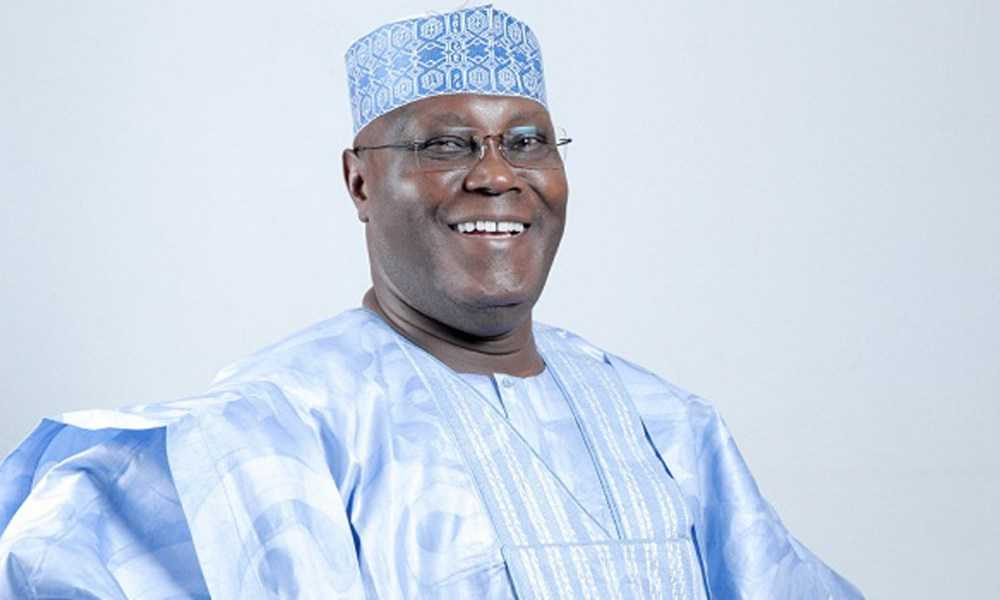
By Paul Ibe The controversy surrounding the demand for the release of United States government records relating to President Bola Ahmed Tinubu’s 1993 forfeiture case raises a question that transcends Nigerian partisan politics: when documentary evidence can help resolve a serious public controversy, should governments rely on political assertions—or let the documents speak? America has confronted this question before. For years, Donald Trump questioned Barack Obama’s eligibility to serve as President of the United States, repeatedly demanding proof of Obama’s American birth. In April 2011, Obama authorised the release of his long-form Hawaiian birth certificate, with the White House explaining that the continuing controversy had become an unnecessary distraction. The document was placed in the public domain so that the evidence could be examined. Trump’s allegation was ultimately unfounded. But the episode demonstrated an important democratic principle: when a controversy can be answered by documentary evidence, evidence is preferable to endless political argument. That principle is relevant to the controversy surrounding Tinubu’s 1993 United States records. This is not a question of whether Tinubu was born in Nigeria or whether he is constitutionally a Nigerian citizen. It is a different and narrower question: what exactly did United States law-enforcement agencies know, investigate and conclude concerning the funds that were forfeited in connection with a bank account associated with Tinubu and linked to heroin trafficking in the early 1990s? The public record establishes that approximately $460,000 was forfeited to the United States in a 1993 forfeiture proceeding. It is important, however, to be precise about what that means. Yes, Tinubu and his officials have claimed that it was a civil forfeiture and that it is not the same thing as a criminal conviction for drug trafficking. But court filings by the FBI in the ongoing FOIA litigation reveal that he was actually investigated for criminal activity involving alleged trafficking in narcotics. This also makes the demand for the underlying records more compelling, not less. If there was no criminal conviction, Nigerians should know what the underlying American investigation established. If the records contain information that materially qualifies the allegations that have circulated for decades, Nigerians should know that too. What did the FBI know? What did the DEA know? What did the U.S. Attorney’s Office know? What led investigators to the accounts? Who else was investigated? What was the evidentiary basis for the government’s action? What role, if any, did American investigators attribute to Tinubu himself? Was he regarded as a suspect, a witness, an associate, an account holder or something else? And, critically, what did the American authorities ultimately conclude? These questions cannot be answered satisfactorily by political spokesmen in Abuja. Nor can they be settled by partisan claims on social media. They can best be answered by the records themselves. That is why the current demand for maximum lawful disclosure deserves to be treated seriously. It is not a demand that Washington determine who should govern Nigeria. It is not a demand that the United States pronounce Tinubu guilty or innocent. It is a demand for access to records generated by the United States government concerning events that occurred under United States jurisdiction. The proper question, therefore, is not: Will the records hurt Tinubu? It should be: What does the law permit the American government to disclose, and why should material that can lawfully be disclosed remain secret ad infinitum? There is an important distinction here between legitimate secrecy and unexplained secrecy. Nobody is seriously suggesting that the United States should expose confidential informants, intelligence sources, grand-jury material, sensitive investigative techniques or information whose disclosure would genuinely compromise national security. Protect such material. Redact it. Protect the privacy of innocent third parties where necessary. But where historical investigative records can lawfully be released, why should they remain hidden—particularly when the matter concerns the integrity of a sitting president of a major democracy? American constitutional history offers a powerful reminder of why documentary evidence matters. During Watergate, President Richard Nixon invoked executive privilege to resist the disclosure of White House recordings. In United States v. Nixon, the U.S. Supreme Court rejected the notion of an absolute presidential privilege and ordered the production of the subpoenaed material. The Court recognised the importance of confidentiality but held that it could not operate as an unlimited shield against legitimate judicial process. The lesson is not that every government record must automatically become public. The lesson is that secrecy requires justification. That principle is particularly important when official records have the potential to resolve a matter that has remained politically contentious for decades. And there is another reason for disclosure. Leaving documentary questions unresolved creates a vacuum. Into that vacuum rush political propaganda, selective documents, social-media claims and competing narratives. And there is another reason for disclosure. Leaving documentary questions unresolved creates a vacuum. Into that vacuum rush political propaganda, selective documents, social-media claims and competing narratives. And there is another reason for disclosure. Leaving documentary questions unresolved creates a vacuum. Into that vacuum rush political propaganda, selective documents, social-media claims and competing narratives. That is not a healthy condition for a democracy. The objective should not be to manufacture a predetermined verdict against Tinubu. Nor should it be to manufacture a predetermined exoneration. The objective should be to establish the facts. Nobody is asking Washington to choose Nigeria’s president. Nigerians will make that choice. Nobody is asking the United States to determine whether Tinubu should contest an election. Nigerian law and Nigerian voters will determine that. The request is much simpler: make available, to the maximum extent permitted by American law, historical records generated by American agencies concerning an event that occurred in America. Their relevance to Nigeria arises because the individual at the centre of that historical controversy is now the President of Nigeria. That makes the matter more significant, not less. The integrity and credibility of a sitting Nigerian president have implications beyond partisan politics. They affect Nigeria’s international reputation, diplomatic relationships, financial credibility, security cooperation and the confidence of citizens in the institutions of the government. President Tinubu himself should have nothing to fear from a transparent process if the available records ultimately support his position. Indeed, disclosure could benefit him. The strongest answer to an allegation is not always a press statement. Sometimes, it is a document. That is why the demand should be straightforward: Release what can lawfully be released. Redact what genuinely must remain protected. Explain the legal basis for anything withheld. And then allow the evidence to speak. If the records vindicate Tinubu, let them vindicate him. If they qualify the allegations, let them qualify the allegations. If they raise further questions, let Nigerians confront those questions. But after decades of controversy, Nigerians should not have to choose between competing political narratives when documentary evidence may be capable of providing the answer. Let the documents speak. And let the curtains be drawn on this theatre of the absurd! - Ibe is Media Adviser to Atiku Abubakar, writes from Abuja. Views expressed are personal to the author and Management of The Mandate cannot be held liable for them.
Posted: 1month ago
Author: Editor in Chief
Current date: 18 October 2026